
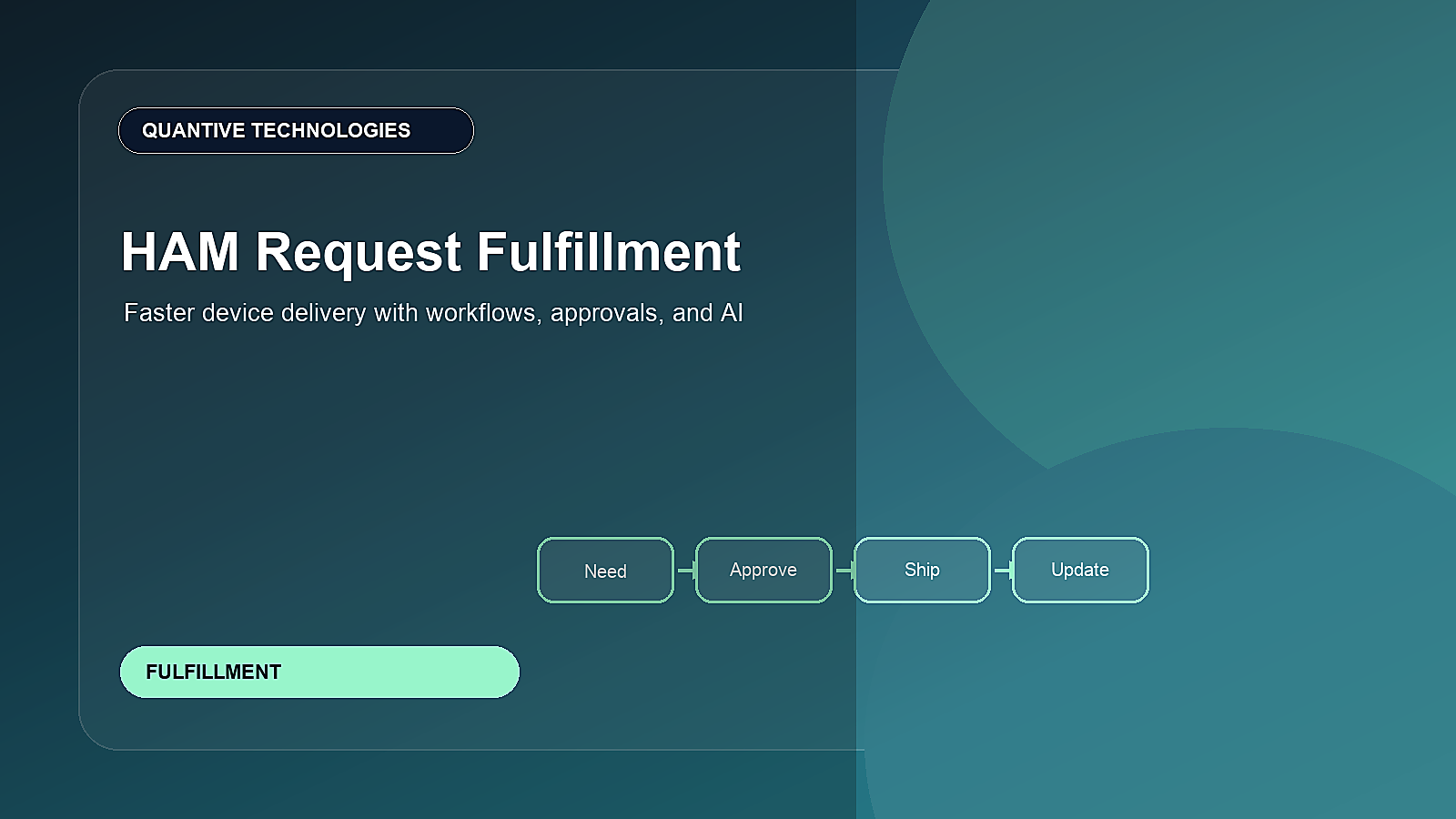
ServiceNow HAM can make device fulfillment faster by connecting employee requests with stock availability, approvals, deployment tasks, and asset records.
For new employees, a laptop delay can become a poor first impression. For IT teams, unclear device requests create chasing, rework, and manual updates. HAM request fulfillment helps turn device delivery into a visible workflow instead of an email chain.
Article at a glance
Why this matters: ServiceNow HAM works best when asset records are connected to the real lifecycle of devices and infrastructure. The article should help newer readers understand both the basics and the operating habits that keep asset data trustworthy.
How to apply this guidance
| Step | What to clarify |
|---|---|
| 1. Map the lifecycle | Define the request, approval, stock, deploy, repair, refresh, audit, and retire stages that need reliable data. |
| 2. Connect operations | Tie assets to users, locations, stockrooms, vendors, contracts, incidents, requests, and CMDB context. |
| 3. Control exceptions | Use audits, ownership checks, disposal evidence, and exception workflows to reduce loss and compliance risk. |
Use the rest of the article as a planning checklist: confirm the target outcome, test the workflow and data assumptions, then connect governance, ownership, measurement, and adoption before expanding the use case.
What HAM fulfillment means in plain language
A user asks for hardware, the request collects the right details, approvals happen if needed, stock is checked or reserved, tasks go to the right team, the device is delivered, and the asset record is updated automatically. That is the practical value of connecting HAM with service catalog and ITSM workflows.
Why this matters now
Hybrid work and distributed hiring have made device delivery more complex. Companies need accurate stock visibility, faster onboarding, consistent approvals, and better tracking of hardware assigned to users, contractors, and remote locations.
Core concepts to understand
| Concept | What it means | Why it matters |
|---|---|---|
| Catalog item | A guided request form for hardware needs | Makes device requests consistent and easy for users |
| Approval rule | A policy-driven step before fulfillment | Controls spend and entitlement |
| Reservation | Holding available stock for an approved request | Prevents available devices from being double-booked |
| Fulfillment task | Work assigned to a team or technician | Creates accountability for delivery steps |
| Asset assignment | Updating the asset record with user and location | Keeps inventory accurate after deployment |
A strong device fulfillment workflow
A well-designed workflow starts with a clear catalog item. It should collect device type, business reason, location, employment type, delivery preference, and any required accessories. The workflow should then check stock, route approvals, and create tasks.
- Use catalog forms that explain options in business language.
- Route approvals based on role, cost, location, or exception type.
- Reserve hardware from the right stockroom after approval.
- Create deployment, shipping, imaging, and handoff tasks where needed.
- Update the asset record immediately when the device is assigned.
Beginner checklist
If you are new to ServiceNow HAM request fulfillment, use this checklist to understand whether your foundation is ready.
- Do users know where to request hardware?
- Does the request form collect enough information without being painful?
- Can the fulfillment team see stock before procurement buys more?
- Are accessories, shipping, imaging, and handoff tasks visible?
- Does the asset record update when the device is delivered?
Common mistakes to avoid
- Using generic tickets for all hardware requests.
- Approving every request manually when policy can automate low-risk cases.
- Failing to reserve stock after approval.
- Completing the request without assigning the asset record.
- Forgetting to include remote shipping, returns, or accessories in the workflow.
Metrics leaders should track
- Average device request fulfillment time.
- Requests fulfilled from existing stock.
- Approval turnaround time.
- Fulfillment task backlog and aging.
- New hire device readiness before start date.
How it connects to the broader ServiceNow roadmap
HAM request fulfillment works best when ServiceNow IT Asset Management is connected with catalog and request workflows in ServiceNow IT Service Management, integrations through ServiceNow Data Integration, and performance tracking in Performance Analytics.
Practical next step
Start with one high-volume hardware request, such as laptop for new hire. Redesign the form, approval, stock check, fulfillment task, and asset assignment process before adding more request types.
Device fulfillment should support onboarding
New hire onboarding is one of the best HAM use cases because the business impact is easy to understand. If the employee has the right equipment on day one, productivity starts faster. If device fulfillment is late, the user experience suffers and managers lose confidence in IT.
Where automation helps
Automation can route standard requests, reserve stock, notify technicians, trigger shipping tasks, and update the requester. AI-assisted experiences can also help interpret user intent, recommend the right catalog item, summarize fulfillment status, or guide service desk agents. The key is to keep approvals and exceptions clear.
Exception handling
Not every request is standard. Executives, contractors, remote employees, international users, or specialized roles may need different hardware. A good workflow handles standard requests quickly while routing exceptions to the right owner with enough context to decide.
Better user experience
Users should not need to know internal stockroom names or asset model codes. The catalog should ask simple questions, such as role, location, delivery timing, accessories, and business reason. Behind the scenes, ServiceNow can translate that request into the right fulfillment path.
Quantive Technologies perspective
Quantive Technologies helps organizations redesign device request workflows, connect HAM with onboarding and ITSM, and create dashboards that show fulfillment speed and inventory reuse.
Need help turning this into a ServiceNow roadmap?
For more information or a focused implementation discussion, please reach out to info@quantivetech.com.