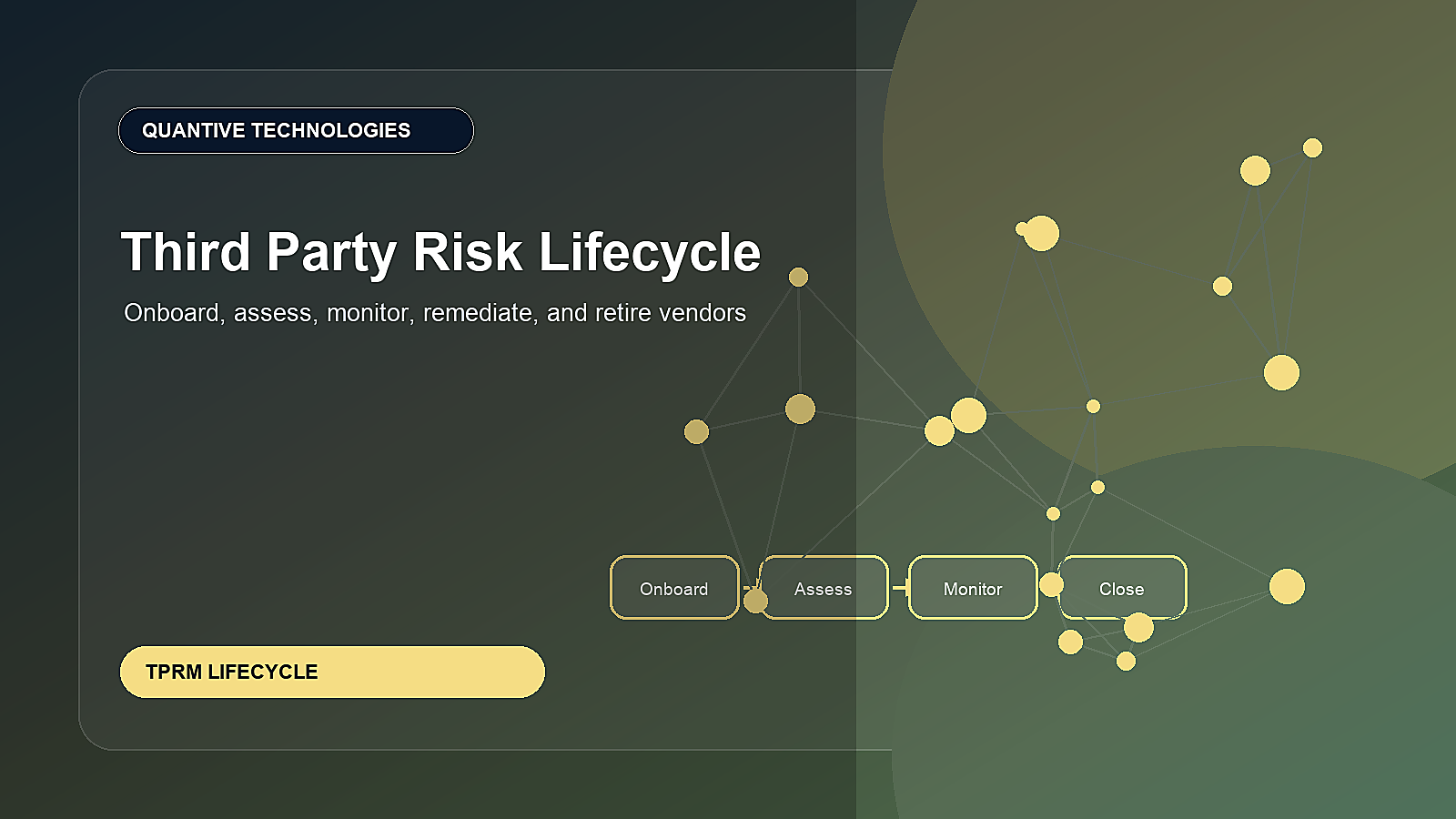
ServiceNow Third-party Risk Management helps organizations manage vendor and supplier risk as a full lifecycle, from onboarding and due diligence through monitoring, issue resolution, renewal, and retirement.
Third parties now support critical operations, customer experiences, data processing, cloud services, AI features, infrastructure, security tools, and business processes. That creates value, but it also creates delegated risk.
ServiceNow positions Third-party Risk Management around centralized vendor risk, automated assessments, ongoing monitoring, issue management, regulatory compliance, and vendor collaboration. That is exactly where many organizations need to move beyond manual questionnaires.
Quick executive takeaway
| Focus area | What leaders should ask | First action |
|---|---|---|
| Lifecycle | Is risk reviewed at onboarding, renewal, change, and retirement? | Define lifecycle gates and owner responsibilities. |
| Criticality | Which vendors can disrupt operations or expose sensitive data? | Tier vendors by business impact and access. |
| Monitoring | Can vendor changes trigger timely action? | Use continuous monitoring and issue workflows. |
Why this is trending now
Third-party risk is now tied to cyber resilience, operational resilience, regulatory compliance, privacy, AI governance, and supply chain stability. A vendor issue can quickly become a customer-facing disruption or data-risk event.
Annual assessments alone are not enough for critical vendors. Organizations need a way to see vendor risk changes, coordinate assessments, collect evidence, escalate issues, and show leadership where the third-party portfolio is improving or deteriorating.
Beginner-friendly explanation
Third-party risk management is the discipline of evaluating and managing risk from vendors, suppliers, contractors, partners, and service providers. The risk may involve security, privacy, financial health, compliance, operational resilience, geography, performance, or concentration.
The lifecycle matters because risk changes. A vendor may be low risk during onboarding, then become critical after gaining access to sensitive data, supporting a core business service, or adding an AI feature.
Core concepts to understand
| Concept | What it means | Why it matters |
|---|---|---|
| Vendor tiering | Classifying vendors by criticality, access, and business impact | Helps focus review depth where risk is highest |
| Due diligence | Initial review before vendor approval or contract | Reduces surprises before onboarding |
| Assessment | Structured questionnaire or evidence request | Creates comparable risk information |
| Issue management | Tracking remediation actions, exceptions, and findings | Turns risk findings into accountable work |
| Retirement | Closing access, data, contracts, and obligations when a vendor relationship ends | Reduces residual risk after offboarding |
A practical TPRM operating model
A practical model starts with a vendor inventory and tiering rules. Critical vendors should receive deeper review, more frequent monitoring, stronger evidence requirements, and clearer executive oversight.
The operating model should connect procurement, legal, privacy, security, compliance, business owners, supplier owners, and risk teams. Vendor risk cannot sit with one group if the vendor affects many parts of the business.
- Create a central vendor inventory with services, owners, contracts, systems, data access, and criticality.
- Define risk-tiering rules for security, privacy, operational resilience, financial, compliance, and AI risk.
- Automate due diligence and assessment workflows based on vendor tier and service type.
- Use secure vendor collaboration to reduce questionnaire fatigue and improve evidence quality.
- Connect findings to issue management, exceptions, renewal decisions, and ServiceNow Integrated Risk Management reporting.
Practical implementation roadmap
- Start with critical vendors and vendors that process sensitive data or support important operations.
- Define tiering criteria and lifecycle gates for onboarding, renewal, change, monitoring, and offboarding.
- Create assessment templates that align to risk type rather than one generic questionnaire for every vendor.
- Build issue workflows with owners, due dates, escalation, evidence, and closure validation.
- Add dashboards for risk concentration, overdue assessments, critical issues, and vendor lifecycle status.
Common mistakes to avoid
- Using the same assessment depth for every vendor.
- Treating onboarding review as the only risk-control point.
- Keeping vendor risk separate from privacy, security, business continuity, and AI governance.
- Letting remediation findings sit in spreadsheets with no owner or due date.
- Failing to retire vendor access, data, and obligations when the relationship ends.
Metrics leaders should track
- Critical vendors with current assessment, owner, contract, and risk tier.
- Overdue assessments, overdue issues, and aged exceptions by vendor tier.
- Vendors with sensitive data access, privileged access, or critical-service dependency.
- Vendor risk trend by business unit, category, geography, and service type.
- Third-party incidents, SLA failures, and issue recurrence.
How this connects across ServiceNow
TPRM connects ServiceNow Integrated Risk Management, ServiceNow Privacy Management, ServiceNow Security Operations, business continuity, supplier lifecycle operations, procurement, legal, and Performance Analytics. It is strongest when vendor risk decisions are visible in the same platform where remediation, evidence, and business workflows happen.
90-day action plan
- Days 1-30: identify critical vendors, sensitive-data processors, and business owners.
- Days 31-60: define vendor tiering, assessment templates, and lifecycle gates.
- Days 61-90: launch issue management, continuous monitoring triggers, and executive dashboards.
Quantive Technologies perspective
Quantive Technologies helps organizations design ServiceNow third-party risk workflows that reduce manual work, improve vendor visibility, and connect risk findings to accountable remediation.
Need help turning this into a ServiceNow roadmap?
For more information or a focused implementation discussion, please reach out to info@quantivetech.com or book your discovery call.