
Comprehensive Cybersecurity Measures
- Proactive Threat Detection and Response
- Automated Incident Response
- Integrated Security Operations
Building Resilience Across the Enterprise
- Business Continuity Planning
- Enterprise Risk Management
- Compliance and Regulatory Adherence
Real-World Impact
Organizations worldwide rely on ServiceNow to secure and strengthen their operations. For example, Siemens Healthineers partnered with ServiceNow to enhance its connected service experience — combining innovation with robust security and resilience to protect critical systems and patient data. This reflects how ServiceNow helps global enterprises build trust through proactive cybersecurity and operational reliability.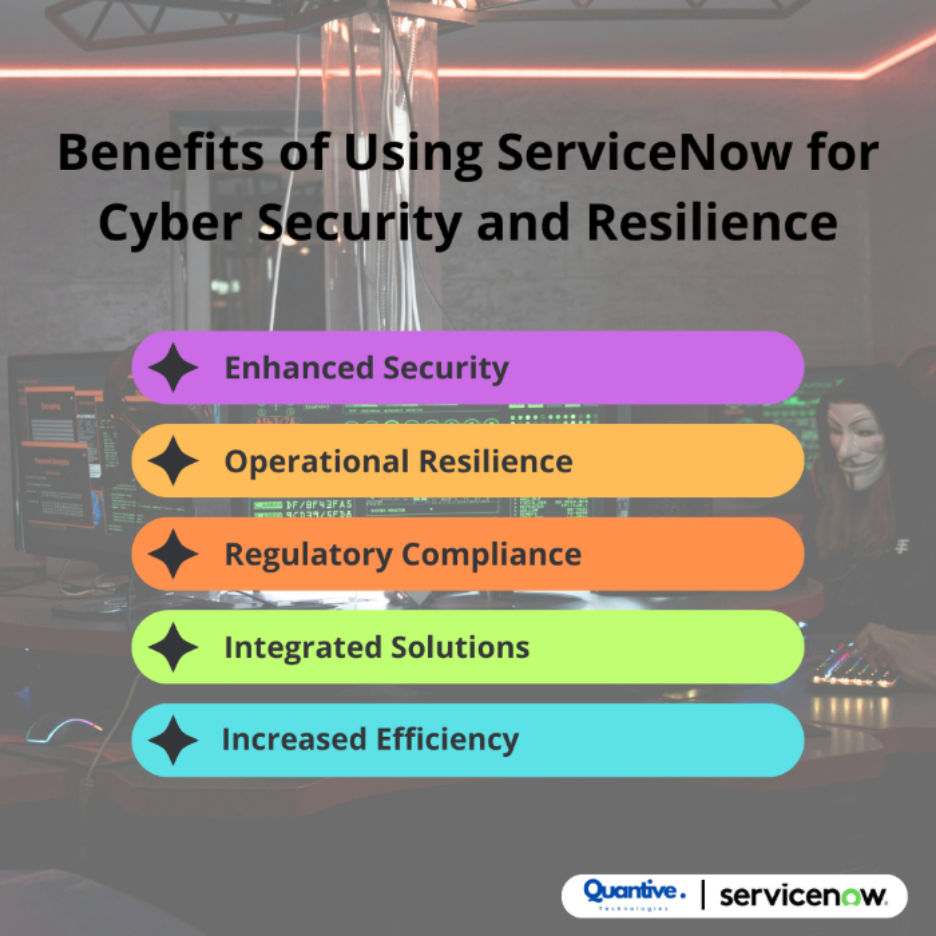
Why Use ServiceNow?
- Enhanced Security: Advanced threat detection and automated response help protect against evolving cyber risks.
- Operational Resilience: Built-in continuity and risk management ensure operations remain stable during disruptions.
- Regulatory Compliance: Streamlined compliance management reduces risk and reinforces stakeholder confidence.
- Integrated Solutions: A unified platform connects security, IT, and operations for faster, coordinated response.
- Efficiency Gains: Automation reduces manual effort, allowing IT and security teams to focus on strategic initiatives.
Executive Visibility: Turning Security Signals Into Business Decisions
Cybersecurity becomes more effective when leaders can see business exposure, not just technical alert volume. ServiceNow helps translate security and resilience work into operational language by connecting incidents, vulnerable assets, service dependencies, risk statements, controls, owners, remediation tasks, and executive dashboards. This gives CIOs, CISOs, risk leaders, and business stakeholders a shared view of which services are exposed, which issues are aging, and where investment should be focused first.
For leadership teams, the value is not only faster ticket handling. The larger benefit is the ability to make risk-based decisions with consistent data. When ServiceNow is connected with ITOM, CMDB, vulnerability tools, identity systems, compliance evidence, and continuity plans, executives can understand the business impact of a disruption before it becomes a board-level problem.
How ServiceNow Coordinates Response Across Teams
Security events often require input from infrastructure, application, compliance, legal, communications, and business continuity teams. Without a common workflow, handoffs slow down and accountability becomes unclear. ServiceNow creates a single system of action where investigation, containment, approvals, remediation, exception handling, and post-incident review can be tracked from one place.
- Security teams can prioritize alerts and vulnerabilities based on asset criticality, exploit risk, service ownership, and exposure.
- IT operations teams can validate affected services, dependencies, configuration data, and recovery tasks through ServiceNow ITOM.
- Risk and compliance teams can connect incidents to controls, evidence, exceptions, policy gaps, and remediation plans through ServiceNow risk management workflows.
- Executives can monitor exposure, aging, SLA performance, control gaps, and remediation progress through ServiceNow Performance Analytics.
Business Impact Areas ServiceNow Helps Protect
A mature cybersecurity and resilience program should protect more than systems. It should protect customer trust, employee productivity, regulatory readiness, revenue continuity, and operational reputation. ServiceNow supports this by giving teams a repeatable model for identifying exposure, assigning ownership, coordinating work, and proving progress.
- Critical service continuity: Link incidents and vulnerabilities to the business services that depend on affected applications, infrastructure, and third-party systems.
- Faster containment: Automate routing, enrichment, escalation, and remediation tasks so the right owners act sooner.
- Stronger audit readiness: Centralize evidence, approvals, exception decisions, remediation notes, and control activity.
- Reduced operational friction: Replace spreadsheet-based coordination with governed workflows and clear accountability.
- Better prioritization: Focus teams on the issues that create the highest business risk, not only the highest technical severity.
Executive Metrics to Track
Leaders need metrics that show whether resilience is improving. Useful ServiceNow dashboards can include critical vulnerabilities past SLA, open remediation by business owner, high-risk services with known exposure, mean time to acknowledge, mean time to remediate, incident recurrence, control failures, open policy exceptions, recovery-plan test status, and risk acceptance aging. These measures help leadership move from reactive reporting to proactive risk reduction.
Governance Checklist for Cyber Resilience Programs
- Define the critical services, systems, data sets, and business owners that need the highest level of protection.
- Validate CMDB and service dependency data so cyber impact can be assessed accurately.
- Map security incidents, vulnerabilities, risks, controls, and continuity activities into connected ServiceNow workflows.
- Create clear assignment rules, escalation paths, approval steps, exception handling, and executive reporting views.
- Integrate key data sources such as vulnerability scanners, monitoring tools, identity platforms, cloud systems, and existing ticket sources.
- Review dashboards monthly with security, IT, risk, and business stakeholders to keep accountability visible.
- Use lessons learned from incidents and tabletop exercises to improve workflows, controls, knowledge, and automation.
Frequently Asked Questions
How does ServiceNow improve cybersecurity response?
ServiceNow improves cybersecurity response by connecting alerts, incidents, vulnerability data, assets, service owners, risk records, approvals, and remediation tasks in one workflow. This reduces manual handoffs and helps teams prioritize work based on business impact.
Why is operational resilience important for cybersecurity?
Operational resilience ensures the business can continue serving customers, employees, and partners during security events, outages, and disruptions. It connects cyber response with continuity planning, recovery ownership, communication, and executive visibility.
What ServiceNow data is most important for resilience?
The most important data usually includes critical business services, CMDB relationships, asset ownership, vulnerability severity, exploit context, open risks, control status, recovery plans, and remediation SLAs. Accurate data helps teams act on the highest-risk issues first.
Conclusion
Incorporating ServiceNow’s cybersecurity and resilience solutions is key to protecting your organization from emerging threats while maintaining operational continuity. By leveraging intelligent automation, proactive monitoring, and enterprise-wide visibility, ServiceNow enables businesses to safeguard data, sustain trust, and drive long-term success. Ready to strengthen your cybersecurity posture? Partner with a trusted ServiceNow expert to build a secure, resilient digital foundation that protects your business today and empowers growth tomorrow. Take the next step toward a safer, smarter enterprise—reach out to our team at info@quantivetech.com to get started.Need help turning this into a ServiceNow roadmap?
For more information or a focused implementation discussion, please reach out to info@quantivetech.com or book your discovery call.