Supplier management does not end when a supplier is approved. In many organizations, supplier onboarding, document collection, risk reviews, issue follow-up, collaboration, and performance management happen across email, spreadsheets, shared folders, ERP fields, and disconnected portals. That creates delays and risk.
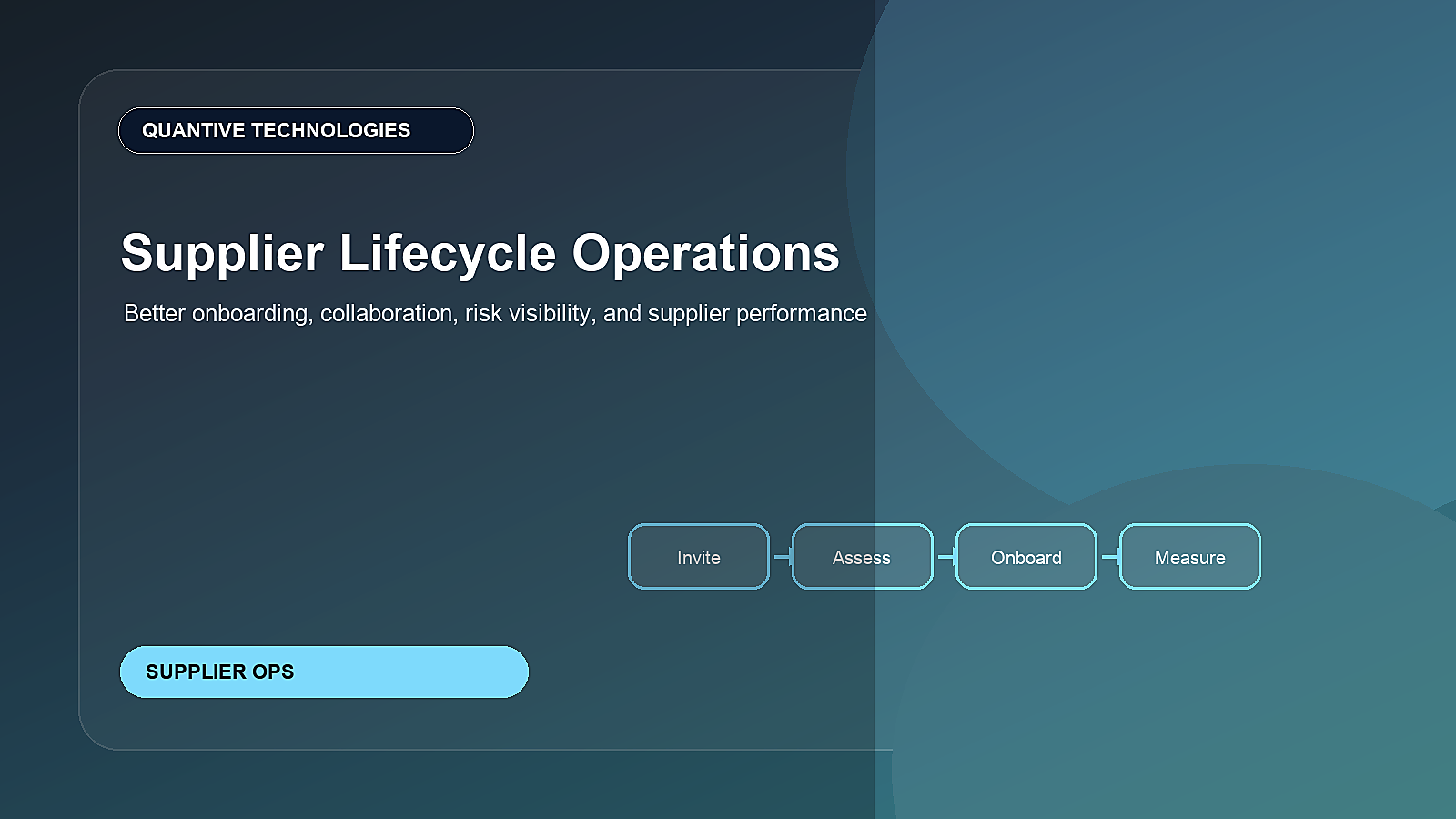
ServiceNow Supplier Lifecycle Operations helps organizations bring more structure to the full supplier journey. It can support supplier onboarding, collaboration, risk visibility, issue management, and performance tracking so procurement and business teams can manage supplier relationships more consistently.
Article at a glance
Why this matters: Supplier performance affects cost, risk, resilience, compliance, and customer delivery. Onboarding is only the beginning; organizations need lifecycle visibility.
How to apply this guidance
| Step | What to clarify |
|---|---|
| 1. Standardize onboarding | Define required supplier data, documents, approvals, risk reviews, system setup, and activation criteria. |
| 2. Enable collaboration | Give suppliers and internal teams a clear place to exchange information, track tasks, and resolve issues. |
| 3. Measure performance | Track cycle time, risk status, issue aging, service quality, compliance, and supplier relationship health. |
Why supplier lifecycle visibility matters
Suppliers influence how quickly a business can deliver products, serve customers, manage cost, comply with obligations, and respond to disruption. A weak supplier process creates hidden risk: missing documents, unclear ownership, slow approvals, incomplete onboarding, unmanaged performance issues, and limited visibility between assessments.
Supplier operations should work like a managed service. Teams need intake, status, ownership, tasks, evidence, decisions, escalations, and analytics. ServiceNow is well suited for this because supplier work is workflow-heavy and cross-functional.
Onboarding should be guided and risk-aware
A strong onboarding workflow collects the right information once, routes reviews to the right teams, and prevents activation until requirements are complete. Different suppliers should follow different paths based on risk, category, region, data access, service criticality, regulatory exposure, and commercial model.
For example, a low-risk office supplier should not follow the same review path as a critical technology provider with access to customer data. Supplier Lifecycle Operations should help enforce those differences without making the requester or supplier navigate a maze.
| Lifecycle stage | Operational focus | Useful metric |
|---|---|---|
| Request | Capture business need, category, expected spend, risk indicators, and sponsor | First-pass completeness |
| Onboarding | Collect supplier profile, documents, tax, compliance, security, and risk information | Onboarding cycle time |
| Activation | Confirm approvals, ERP setup, portal access, and internal ownership | Activation defects |
| Collaboration | Manage supplier tasks, communications, document refresh, and issue resolution | Open issue aging |
| Performance | Track delivery, quality, risk, compliance, relationship health, and renewal readiness | Supplier score trend |
Collaboration is where many programs improve fastest
Supplier teams often lose time because information is scattered. A supplier asks a question in one email thread, procurement tracks a task in another, risk stores evidence elsewhere, and the business owner has no current view. A structured collaboration workflow gives everyone a shared record of tasks, documents, questions, issues, and decisions.
That also helps suppliers. A clear portal or collaboration experience can reduce duplicate requests, shorten onboarding, and make expectations visible. Supplier experience matters because better collaboration often leads to faster resolution and stronger performance.
Risk and performance should be connected
Supplier risk is not a one-time onboarding activity. Risk can change because of security issues, financial instability, geopolitical events, performance failures, compliance gaps, data exposure, or operational disruption. Supplier Lifecycle Operations should connect onboarding, third-party risk, issue management, and performance data so teams can see changes early.
This is where ServiceNow Third-Party Risk Management can complement supplier operations. Procurement may own the relationship, but risk, security, privacy, legal, finance, and business teams all contribute to supplier oversight.
Implementation roadmap
- Define supplier tiers: Segment suppliers by criticality, data access, spend, service impact, geography, and risk exposure.
- Standardize onboarding paths: Create different workflows for low, medium, high, and critical suppliers.
- Build the supplier record: Agree which system owns supplier master data and which fields ServiceNow needs for workflow context.
- Design collaboration: Give internal teams and suppliers a clear way to exchange tasks, documents, questions, and updates.
- Connect risk and issues: Route supplier risks, exceptions, and performance issues to accountable owners.
- Measure performance: Track onboarding time, issue aging, supplier score, compliance status, and renewal readiness.
Questions leaders should ask
- Which suppliers are critical to operations or customer delivery?
- Where does supplier onboarding slow down today?
- Which supplier documents, approvals, and reviews are repeatedly missing?
- How do business owners know whether a supplier is healthy or at risk?
- Can procurement, risk, and business teams see the same supplier status?
Quantive Technologies perspective
Quantive Technologies recommends designing supplier lifecycle workflows around the full relationship, not only the intake form. The best programs connect supplier onboarding, collaboration, Risk Management, data integration, and Performance Analytics so leaders can improve speed, compliance, and supplier experience together.
ServiceNow describes Supplier Lifecycle Operations as a way to streamline supplier onboarding, collaboration, and performance management. Learn more on the ServiceNow Supplier Lifecycle Operations page.
Need help turning this into a ServiceNow roadmap?
For more information or a focused implementation discussion, please reach out to info@quantivetech.com or book your discovery call.