
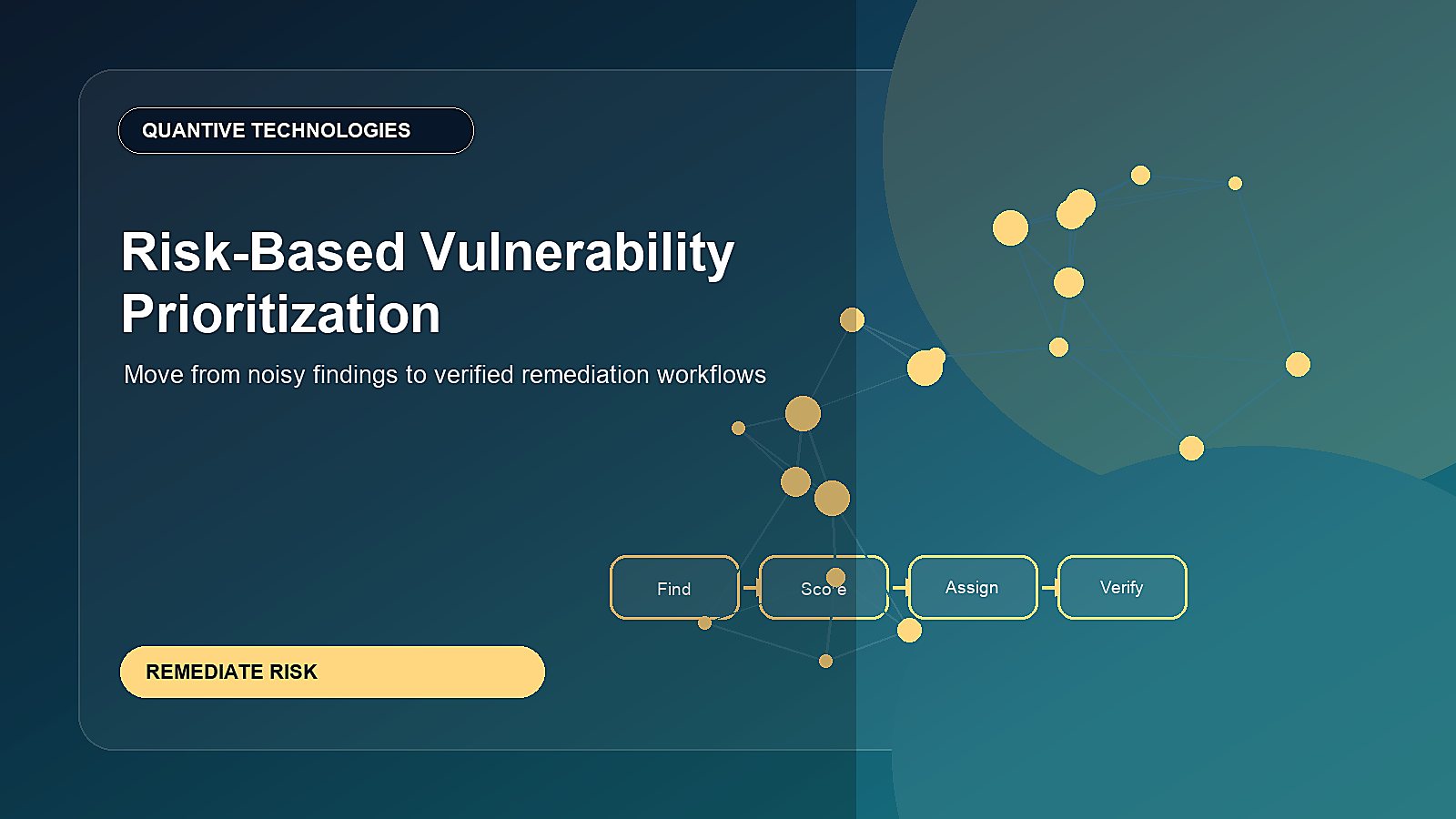
The most mature vulnerability programs are no longer asking which scanner finding has the highest score. They are asking which exposed risk should be fixed first and how to prove it was fixed.
Traditional vulnerability queues create noise. Thousands of findings may be technically valid, but the real risk depends on asset criticality, internet exposure, exploitability, missing controls, business service impact, and whether compensating controls exist.
ServiceNow can help teams connect vulnerability data with posture signals, asset context, remediation ownership, exceptions, and validation. This is where ServiceNow Security Posture Control, Vulnerability Response, ServiceNow Security Operations, and Risk Management become stronger together.
Quick executive takeaway
| Focus area | What leaders should ask | First action |
|---|---|---|
| Context | Which vulnerabilities affect important, exposed, or weakly controlled assets? | Join scanner data with asset and control context. |
| Workflow | Who owns remediation and what proof closes the item? | Route fixes through accountable work queues. |
| Validation | Was the risk actually reduced? | Confirm closure through rescans, control signals, and evidence. |
Why this is trending now
Security teams are under pressure to reduce exposure faster while handling more assets, more software, and more cloud change. Prioritization based only on severity can waste effort on findings that are not reachable or not material.
ServiceNow describes Security Posture Control as a way to adjust vulnerability risk using security-control context such as endpoint protection and firewall signatures. That direction reflects the broader market move from vulnerability management to exposure-informed remediation.
Beginner-friendly explanation
Risk-based prioritization means ranking vulnerabilities by the chance and impact of real exploitation. A critical vulnerability on an isolated lab asset may not outrank a high vulnerability on an internet-facing system that supports a revenue service and lacks endpoint protection.
The practical goal is not to ignore lower-priority findings. It is to sequence work so the organization reduces meaningful exposure first while still tracking exceptions, trends, and residual risk.
Core concepts to understand
| Concept | What it means | Why it matters |
|---|---|---|
| Vulnerability signal | A scanner or intelligence finding that indicates weakness | Provides the raw input for analysis |
| Asset criticality | The business importance of the affected asset or service | Helps prioritize work by potential impact |
| Exposure | Whether attackers can realistically reach or exploit the weakness | Separates theoretical risk from urgent risk |
| Compensating control | A security control that reduces likelihood or impact | Improves prioritization accuracy |
| Verified fix | Evidence that remediation happened and risk is reduced | Protects against false closure and repeated exposure |
A practical vulnerability prioritization model
Start by defining the scoring ingredients. Include vulnerability severity, exploit intelligence, asset criticality, internet exposure, business service impact, control coverage, age, and exception status. Then decide which combinations require urgent action.
The model should turn prioritized findings into work. Each item needs an owner, due date, remediation path, validation method, and escalation rule. Otherwise, prioritization becomes another report rather than an operating process.
- Bring scanner data into ServiceNow and normalize affected assets.
- Connect findings to CMDB services, owners, asset criticality, and control coverage.
- Use policies to identify risky combinations, such as internet exposure plus missing controls.
- Route remediation to the team that can fix the asset, not only the security analyst.
- Validate closure through rescan evidence, configuration evidence, or approved risk acceptance.
Practical implementation roadmap
- Choose priority asset groups, such as internet-facing systems, critical applications, and regulated environments.
- Define scoring logic that combines vulnerability severity with asset and control context.
- Build remediation workflows for assignment, due dates, exception approval, and validation.
- Create dashboards for aging, ownership, recurring vulnerabilities, and verified risk reduction.
- Review the model every quarter as threat intelligence, architecture, and business priorities change.
Common mistakes to avoid
- Using CVSS or scanner score as the only prioritization factor.
- Closing findings without proof that the affected asset is fixed or protected.
- Allowing remediation tasks to route to generic queues with no accountable owner.
- Ignoring compensating controls and business service impact.
- Failing to distinguish accepted risk from unresolved risk.
Metrics leaders should track
- High-risk exposed vulnerabilities by owner, service, and age.
- Mean time to assign, remediate, and verify top-priority findings.
- Findings reopened after failed validation or repeat scan.
- Exception volume and aging by risk owner.
- Risk reduction trend for critical services and internet-facing assets.
How this connects across ServiceNow
Risk-based vulnerability prioritization connects ServiceNow Security Operations, Risk Management, CMDB, ServiceNow IT Asset Management, ServiceNow IT Operations Management, and Performance Analytics. It also supports executive reporting because leaders can see whether exposure is actually decreasing, not only whether more tickets were opened.
90-day action plan
- Days 1-30: define the first scoring model for internet-facing and business-critical assets.
- Days 31-60: test remediation routing with a small group of application and infrastructure owners.
- Days 61-90: add validation rules, exception governance, and executive trend reporting.
Quantive Technologies perspective
Quantive Technologies helps organizations turn ServiceNow vulnerability data into prioritized, accountable, and measurable remediation workflows. Our focus is reducing true exposure while giving leaders evidence that risk is moving in the right direction.
Need help turning this into a ServiceNow roadmap?
For more information or a focused implementation discussion, please reach out to info@quantivetech.com or book your discovery call.